



Terms of cleaning and complaints Rules
Dear customers, we kindly ask you to carefully read the conditions for cleaning. Daja Dry Cleaners faces ever greater challenges in its field every year. Work becomes more complicated thanks to ever newer textiles and combinations. This represents several problems in care for clothing and textiles. In order to keep pace, we face constant resolution of challenges to preserve the perfection of clothing. Everything is important, be this a small family historical piece, or expensive luxury gown. The dry cleaners Daja tries to save every item for its customers.
Hidden defects, damage and emphasis of wear and tear on textile clothing
After dry-cleaning, hidden defects exhibit themselves and wear and tear on the clothing is emphasised. Some parts of clothing made from highly fashionable materials cannot be cleaned whilst preserving all of the fashionable effects of a new unused product.
In accordance with the provisions of Section 2594 Civil Code, we would like to point out that certain defects are accentuated when cleaning is performed (impurities are washed away). Signs of wear and tear cannot be removed from clothing by being washed. The dry cleaners shall not be held liable for defects created through cleaning of a defective order. We inform you of these facts and ask for statement by you (your signature on the job order) whether you wish your order to be cleaned subject to this condition.
A product may exhibit the following defects:
- staining of dark colours onto light linings and vice versa
- low colour permanency – in the light, in an abrasion – bleaching, lightening, uneven colouring
- low colour permanency of leather edging, collars etc., combined with textiles – possibility of staining, decolouration of textile parts of clothing
- summer suit fabrics (trousers, jacket) – colouring disturbed by sweat (knee creases, in the area of the armpits) change in colour created cannot be removed
- frontal fixation (tailoring preparation) – impairment – emphasis (front part of jackets, gowns etc.)
- quilted/feather job orders – possibility of flattening, collapse of the quilted filling, impairment of the membrane coatings
- warm fleece – flattening, loosening, ripping, formation of clumps, uneven lumps
- ageing of artificial leather – possibility of cracking, peeling, hardening of edging and surfaces
- shiny patches and mechanical wear and tear cannot be completely restored – natural silk, wool etc.
- ties – cannot always be shaped, the quality of cleaning depends on the cut and sewing of materials cut diagonally and preparation – filler material
- inserted membranes – Sympatex, Goretex, etc. – possibility of impairment of integrity, rustling and similar.
- microporous membrane – ages, loosening of polyurethane material, creation of light to white stains – possibility of damage, creation of creases, peeling, blisters, stiffening, hardening – possibility of size change – insufficient size permanency
- coating treatments on the front and reverse side – lifespan of treatment including regular cleaning is approx. 2-3 years
- decorative elements (buttons, clasps and similar) – damage anticipated, advisable to remove before cleaning
- knits – loosening, stretching, loss of flexibility – cleaning will not restore this but rather emphasise it
- order from brushed material (light fleece) wear and tear is emphasised – abrasion
- flocked textiles – possibility that the effect will be washed away, even if a gentle procedure is carefully chosen
- synthetic velour – several soiled areas with no velour hairs – cannot be restored
- Antilox, Vlotex and similar types – may stiffen and harden, exposed places cannot be restored
- clothing made from brushed microfibre – creases and some stains cannot be removed
- quilts from repeatedly used fibres – no information about the composition – possibility of stiffening, change in volume and touch also possible
- quilts with a microfibre filling – flattening of insufficiently fixed filling, especially volume
- decrease in hydrophobic and other treatments, textiles, which are not permanent
- inexpert intervention – washed, colourless, damaged, stained etc. – cannot be restored
- shabby clothing – age, mechanical wear and tear – emphasised
- care symbols missing – diverse material anticipated – possibility of damage
- lining heavily soiled – cannot be cleaned without disturbing the delicate surface fabric
- symbol F – higher level of soiling – cannot be completely cleaned
- we do not assume liability for clothing with no labels (cleaning and ironing symbols).
- stains cannot be separately removed – some older stains cannot be removed
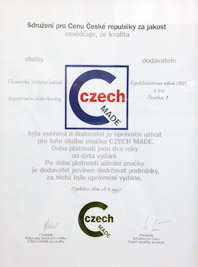
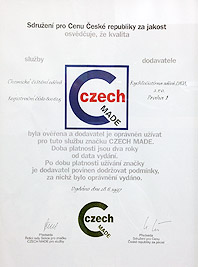
Our Awards